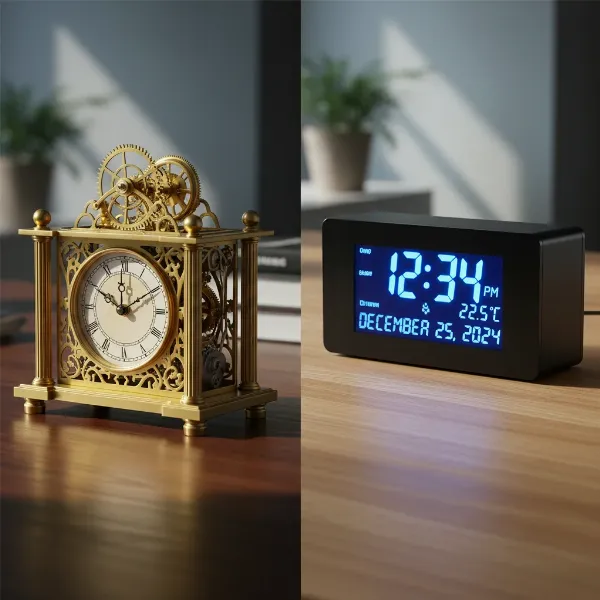
The humble desk clock has evolved dramatically, transforming from simple time-telling devices into sophisticated smart hubs. In today’s dynamic world, choosing the right timepiece for your desk isn’t just about knowing the hour; it’s about integrating functionality, style, and personal wellness into your daily routine. Whether you’re drawn to the timeless elegance of a traditional desk clock or the cutting-edge capabilities of a smart clock, understanding their distinct features is crucial. This comprehensive guide will navigate the world of desk clocks, helping you discern the differences and make an informed decision that perfectly aligns with your needs and aesthetic preferences.
Popular Types of Desk Clocks
Desk clocks come in various forms, each offering a unique blend of aesthetics and functionality. From the intricate gears of a mechanical marvel to the interactive displays of smart technology, these timepieces cater to diverse tastes and practical requirements.
Traditional Mechanical Clocks
Mechanical desk clocks embody a timeless charm, often featuring an analog display with hands that sweep across a classic face. These clocks operate through an intricate system of gears, springs, and balances, driven by kinetic energy. They represent a connection to craftsmanship and history, often serving as elegant decorative pieces rather than mere time-tellers.
- Advantages: The primary appeal of mechanical clocks lies in their aesthetic appeal and classic design. They can add a touch of vintage sophistication to any desk or room, making them favored by those who appreciate traditional craftsmanship. Unlike electronic devices, they typically emit no blue light or electromagnetic fields (EMF) unless they have an added battery-powered component for quartz accuracy, which makes them a more sleep-friendly option for bedrooms. They also offer a tangible connection to timekeeping history.
- Disadvantages: While beautiful, mechanical clocks are generally less accurate than their digital counterparts and may require manual winding, which can be seen as a hassle for some. They also lack modern features such as alarms, timers, or smart integrations, limiting their functionality to basic time display.
- Operation and Maintenance: Mechanical clocks often require manual winding at regular intervals to maintain operation. Their maintenance typically involves gentle dusting and occasional professional servicing to ensure the intricate internal mechanisms function correctly. Protecting them from dust and humidity is key to their longevity.
- Notable Characteristics: These clocks often feature a silent or a subtle ticking sound, which some find soothing. They are valued more for their artistic and historical significance than for pinpoint accuracy or advanced features.
|
Our Picks for the Best Desk clock in 2026
As an Amazon Associate I earn from qualifying purchases.
|
||
| Num | Product | Action |
|---|---|---|
| 1 | DreamSky Digital Alarm Clocks for Bedrooms - Wooden Desk Clock with Date, Day of Week, USB Port, Temperature, Dimmer for Bedside Table, Living Room, Office, Adjustable Volume, Auto DST, Wood Decor |

|
| 2 | Peakeep Large Display Digital Alarm Clock for Bedrooms, Date Day of Week Calendar Desk Table Clocks for Living Room Office, Dimmable Plug in Electric Clock, 5 Volumes, Loud, Auto DST |
|
| 3 | AYRELY® 4.5" Analog Alarm Clock,Small Retro Desk Clock Battery Operated,Slient Metal Table Clock with Light for Living Room Decor,Bedroom,Bedside,Shelf (Blue) |
|
| 4 | Clock with Day and Date for Elderly, 7" Large Display Digital Calendar Day Clock with 20 Custom Alarms and Medicine Reminders, Dimmable Dementia Alzheimers Clocks for Seniors, Black (Ac Powered) |
|
| 5 | AYRELY® 4.5" Analog Alarm Clock,Small Retro Desk Clock Battery Operated,Slient Metal Table Clock with Light for Living Room Decor,Bedroom,Bedside,Shelf (Orange-Yellow) |
|
| 6 | Amazon Basics Small Digital Oval Alarm Clock with LED Display, Nightlight, Snooze Function & Battery Backup, Black, 4.5 x 3.5 x 2.4 Inches |
|
| 7 | Peakeep Slim Digital Mirror Aesthetic Alarm Clock for Bedrooms Desk Decor - Plug in Electric Big LED Modern Small Clock for Office Living Room, Battery Backup, 6 Dimmers (Gold) |
|
| 8 | Sharp Digital Alarm Clock with Keyboard Style Controls, Battery Back-up, Easy to Use with Simple Operation, Black Case with Red LED Display |
|
| 9 | DreamSky Wooden Digital Alarm Clock for Bedroom - Desk Clock for Living Room with Large Numbers, Dimmer, Loud Alarm for Heavy Sleepers with Volume Control, DST, Office Wood Decor (Plug in Clock) |
|
| 10 | Netzu 3-in-1 Digital Clocks for Living Room with Temperature, Date & Time Display - 4 Levels Birghtness, 3 Volumes, Small & Compact Plug-in Alarm Clock for Bedroom, Office (Black) |
|
Digital Desk Clocks
Digital desk clocks offer a modern and practical approach to timekeeping. They utilize electronic displays, typically LED or LCD, to show the time in numerical format. These clocks are powered by electricity or batteries and are known for their precision and additional features that enhance daily convenience.
- Advantages: One of the most significant benefits of digital desk clocks is their precision and accuracy. Many models synchronize with atomic clocks, ensuring exact timekeeping down to the second and automatic adjustment for daylight saving time. They are generally easy to read due to their clear, illuminated displays, even in low-light conditions. Digital clocks often come equipped with a variety of additional features, such as multiple alarms, countdown timers, and temperature displays, making them multifunctional tools for any workspace.
- Disadvantages: Some digital clocks emit blue light, which can be disruptive to sleep patterns if placed in a bedroom, similar to other electronic screens. They are also reliant on a power source (either batteries or an AC adapter), meaning they might not function during power outages unless equipped with a backup battery.
- Smart Features (basic): While not “smart clocks” in the connected sense, many digital desk clocks offer useful electronic features like snooze functions, radio, and customizable display brightness. These conveniences make them highly practical for daily use without the complexity of internet connectivity.
- Usage: Digital clocks are versatile and can fit into contemporary decor with their sleek designs. They are ideal for users who prioritize exact time, clear readability, and basic helpful features without needing advanced connectivity.
Smart Clocks
Smart clocks represent the pinnacle of desktop timekeeping technology, integrating advanced features, connectivity, and often voice control into a compact device. These clocks go far beyond simply displaying the time, acting as intelligent hubs for productivity, entertainment, and smart home management.
- Advantages: Smart clocks offer an extensive range of advanced features. Many come with calendar integration, syncing with your digital schedule to display upcoming appointments and reminders. They can provide weather forecasts, act as digital photo frames, and even control smart home devices like lighting or thermostats via voice commands (e.g., Google Assistant, Alexa). Connectivity options like Wi-Fi and Bluetooth allow for smartphone app integration, offering personalized settings and functionalities. Some models feature gentle wake-up experiences, such as sunrise simulation alarms that gradually brighten, or customizable soothing sounds. Many also include USB charging ports, adding convenience to your bedside or office setup.
- Disadvantages: The enhanced functionality often comes with a higher cost compared to traditional and basic digital clocks. Smart clocks can also be a source of distraction with their notifications and interactive displays, potentially impacting focus. Their reliance on internet connectivity means that some features might be limited during network outages. Like many digital devices, they emit blue light and EMF, which can be a concern for some users, particularly in bedrooms. There can also be a learning curve to fully utilize all their features and integrations.
- Alarm Types: Smart clocks offer highly customizable alarm settings, from traditional beeps to music streaming, nature sounds, and innovative sunrise simulations that gently ease you awake.
- Choosing: When considering a smart clock, think about your existing smart home ecosystem (e.g., Google Home, Amazon Alexa) to ensure seamless integration. Evaluate which smart features are most important to you – calendar reminders, smart device control, or advanced alarm capabilities – to select a model that truly enhances your daily routine without overwhelming it.
[image-1|smart-clock-desk-comparison|A modern smart clock on a minimalist desk displaying time, weather, and a calendar event.|
A sleek, modern smart clock with a digital display showing the current time, local weather icons, and a brief calendar appointment. The clock is positioned on a minimalist light wood desk, with a blurred background of a contemporary home office. Soft, natural light illuminates the scene, and the style is clean and functional.]
Your Guide to Buying a Desk Clock
Choosing the perfect desk clock involves more than just picking one that tells time. It’s about finding a timepiece that complements your lifestyle, enhances your workspace, and meets your practical needs. Consider these factors to guide your decision.
Determine Your Needs
Before diving into features and aesthetics, clearly define what you expect from your desk clock. This foundational step will narrow down your options significantly.
- Purpose of Use: What is the primary function you need the clock for? Is it purely for telling time, or do you require an alarm, a calendar, or smart home integration? For basic timekeeping with a touch of decor, a traditional mechanical or simple digital clock might suffice. If productivity and connectivity are priorities, a smart clock is likely a better fit.
- Placement: Where will the clock be located? A bedside table might benefit from a clock with dimmable displays and gentle alarms, ideally minimizing blue light emission. For a bustling office, a smart clock with robust calendar and notification features could be invaluable. In a living room or study, an elegant mechanical clock might serve as a focal point.
- Budget: Desk clocks vary widely in price. Traditional mechanical clocks, especially artisanal ones, can be a significant investment, while basic digital clocks are often very affordable. Smart clocks generally fall in the mid to high range, depending on their features and brand. Determine how much you’re willing to spend to manage expectations.
Select the Right Clock Type
Once your needs are clear, consider the specific characteristics that define different clock types, ensuring your choice aligns with your personal style and functional requirements.
- Style: Do you prefer a classic, vintage look that blends with traditional decor, or a sleek, minimalist design suitable for modern spaces? Traditional analog clocks offer a timeless aesthetic, while digital and smart clocks typically feature contemporary designs.
- Material: The material of the clock can significantly impact its appearance and durability. Options range from warm wood and robust metal to lightweight plastic. Consider how the material will complement your existing desk setup and room decor.
- Features: Beyond basic time, what functionalities are essential?
- Alarms: Do you need multiple alarms, a snooze function, or a gentle wake-up light?
- Charging: Is a USB charging port for your phone or other devices a convenient addition?
- Smart Integration: Do you want to control smart home devices, get weather updates, or sync with your digital calendar?
- Display: Do you prefer an analog face, a clear LED/LCD digital display, or an interactive touchscreen?
Compare Prices and Purchase
After identifying your ideal clock type and features, the next step is to find the best value and ensure a quality purchase.
- Research Reputable Retailers: Look for established electronics stores, home goods retailers, or specialized clock shops, both online and physical. Online giants often offer a wide selection and competitive pricing, while specialty stores might provide expert advice and unique models.
- Compare Prices: Utilize online price comparison tools or visit several stores to compare prices for similar models. Be aware that prices can fluctuate, so checking multiple sources is beneficial. Also, consider the total cost, including any shipping fees or extended warranty options.
- Check Product Quality and Reviews: Before committing to a purchase, read customer reviews and ratings to gauge product reliability and user satisfaction. Look for information on accuracy, durability, ease of use, and customer service. A good warranty can also provide peace of mind regarding your investment.
Comparison Table of Desk Clocks
| Type of Clock | Key Advantages | Key Disadvantages | Ideal User |
|---|---|---|---|
| Mechanical Desk Clock | Classic aesthetic, no digital distractions, often durable craftsmanship. | Less accurate, no modern features, may require manual winding. | Traditionalists, decor enthusiasts, those seeking a digital detox. |
| Digital Desk Clock | High accuracy, easy-to-read display, basic alarms/features (e.g., temperature). | Some blue light emission, requires power/batteries, limited smart connectivity. | Practical users, minimalists, those needing clear, precise time. |
| Smart Clock | Advanced features (calendar, weather, smart home control), connectivity, voice control, modern. | Higher cost, potential for distraction, internet dependent, blue light/EMF. | Tech enthusiasts, productivity-focused individuals, smart home users. |
Tips for Using and Maintaining Your Desk Clock
Proper care and maintenance can significantly extend the life and preserve the appearance of your desk clock, regardless of its type. A little attention goes a long way in ensuring your timepiece remains a reliable and attractive fixture on your desk.
Proper Cleaning
Regular and correct cleaning is essential to keep your desk clock looking its best and functioning well.
- Basic Cleaning Steps: Start by gently dusting the clock’s exterior with a soft, dry microfiber cloth. For analog clocks, be careful around the hands and delicate face. For digital and smart clocks, gently wipe the screen to remove fingerprints and smudges.
- Using Appropriate Cleaning Solutions: For stubborn marks, lightly dampen your cloth with a mild, non-abrasive cleaner. For most clock materials like plastic or metal, a small amount of water or a specialized screen cleaner (for digital displays) will suffice. Avoid harsh chemicals, alcohol, or abrasive materials, as these can damage finishes, screen coatings, or delicate mechanisms. Always refer to the manufacturer’s cleaning instructions if available.
Storage and Care
When not in use, or for long-term preservation, proper storage conditions are crucial for desk clocks.
- Avoid Direct Sunlight: Prolonged exposure to direct sunlight can fade the color of wooden or plastic casings, degrade electronic components, and even affect the accuracy of some clocks by altering internal temperatures. Position your clock in a spot with indirect light.
- Avoid Humid Environments: Excessive humidity can cause corrosion in mechanical clock movements and damage the electronic components of digital and smart clocks. Keep your clock in a stable, dry environment. Avoid placing it near bathrooms, kitchens, or open windows where moisture levels can fluctuate.
- Place in a Safe, Stable Location: Ensure your desk clock is placed on a flat, stable surface where it won’t be easily knocked over. Keep it away from areas prone to spills or heavy vibrations, which can damage delicate internal parts or lead to scratches on the exterior. For battery-operated clocks not in use for extended periods, it’s wise to remove the batteries to prevent leakage and potential damage.
Conclusion
The choice between a desk clock and a smart clock ultimately hinges on your individual needs, aesthetic preferences, and how you envision technology integrating into your daily life. A traditional mechanical desk clock offers a classic, visually appealing experience, grounding your space in timeless elegance and craftsmanship without digital distractions. Digital desk clocks provide practical accuracy, easy readability, and useful basic features like alarms and temperature displays, fitting seamlessly into a modern, minimalist environment. Smart clocks, on the other hand, stand as multifunctional powerhouses, offering unparalleled connectivity, advanced features like calendar integration, smart home control, and personalized wake-up routines, catering to the tech-savvy and productivity-focused individual.
The ideal timepiece should not only tell the time but also enhance your surroundings and streamline your routine. By carefully considering factors such as purpose, placement, and desired features, you can select a clock that truly resonates with your lifestyle. Which features of a desk clock are most essential for improving your daily productivity?
Frequently Asked Questions
Are smart clocks really better for productivity?
Smart clocks can significantly boost productivity by integrating features like calendar reminders, task lists, and weather updates directly into your line of sight. Voice control allows for hands-free management of your schedule and smart home devices, reducing the need to constantly check your phone or computer. However, their effectiveness depends on how well you utilize these features and manage potential distractions.
Do analog clocks still have a place in modern offices?
Absolutely. While lacking smart features, analog clocks offer a classic aesthetic that can add sophistication and a calming presence to a modern office. They provide a clear visual representation of time that many find easier to glance at for time management, and they eliminate the digital distractions and blue light associated with electronic devices, which some professionals prefer.
What is “blue light” and why is it bad for sleep?
Blue light is a segment of the visible light spectrum emitted by electronic screens, including many digital and smart clocks. Exposure to blue light, particularly in the evening, can suppress the production of melatonin, a hormone that regulates sleep cycles. This disruption can make it harder to fall asleep and impact the quality of your sleep, leading to grogginess and reduced alertness.
How often do I need to replace batteries in a digital desk clock?
The battery life of a digital desk clock varies greatly depending on the model, battery type, and frequency of feature use (e.g., alarm, backlight). Generally, standard AA or AAA batteries in a basic digital clock can last from 6 months to over a year. Clocks with more advanced features or brighter displays may require battery replacement more frequently.
Can smart clocks control other smart home devices?
Yes, many smart clocks are designed to integrate with popular smart home ecosystems like Google Home or Amazon Alexa. This allows you to use voice commands or the clock’s touchscreen interface to control compatible smart lights, thermostats, door locks, and other connected devices, turning your desk clock into a central command center for your smart home.