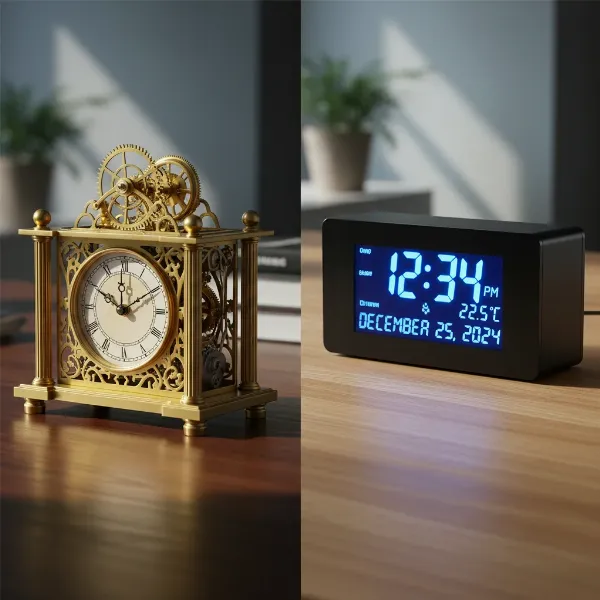
A desk clock is more than a simple time-telling device; it’s a statement of style, a functional tool, and a subtle addition that can elevate the ambiance of any room. In an age dominated by digital screens, the charm of a physical desk clock remains unique, offering a blend of nostalgia, elegance, and personality that smartphones often lack. From traditional mechanisms to contemporary smart features, selecting the perfect desk clock involves understanding your needs, matching your aesthetic, and considering practical functionalities. This comprehensive guide will help you navigate the diverse world of desk clocks to find a timepiece that not only keeps you punctual but also beautifully complements your home.
Popular Types of Desk Clocks
Desk clocks come in various forms, each offering distinct advantages and a unique character. Understanding these types is the first step in finding your ideal timepiece.
Mechanical Clocks
Mechanical clocks represent a rich heritage of horology, driven by intricate systems of gears, springs, and sometimes pendulums. These clocks operate without batteries or electricity, relying instead on manual winding to store energy.
- Pros and Cons: The primary advantage of a mechanical clock is its exquisite craftsmanship and timeless appeal. Many appreciate the visible inner workings and the rhythmic “tick-tock” sound. They can be considered heirloom pieces, increasing in value over time. However, mechanical clocks require regular winding—daily or weekly, depending on the model—and periodic professional servicing (typically every few years) to ensure accuracy and longevity. They are often more expensive and can be delicate.
- How They Work and Maintain: A mechanical clock functions by converting the stored energy from a wound mainspring into kinetic energy that powers a series of gears. An escapement mechanism regulates this energy release, allowing the balance wheel or pendulum to swing at a consistent rate, thus marking time. Maintenance involves keeping the clock clean, free from dust, and placing it on a stable, level surface. Crucially, these clocks need to be professionally oiled and cleaned periodically to prevent wear on their delicate components.
- Notable Characteristics: Mechanical desk clocks often feature classic designs, Roman numerals, and high-quality materials like brass, wood, and glass. Brands such as Hermle, Matthew Norman, Jaeger-LeCoultre, and Cartier are renowned for their sophisticated mechanical desk clocks. Their presence often adds a touch of vintage elegance and a focal point to a study or living room.
|
Our Picks for the Best Desk clock in 2026
As an Amazon Associate I earn from qualifying purchases.
|
||
| Num | Product | Action |
|---|---|---|
| 1 | Netzu 3-in-1 Digital Clocks for Living Room with Temperature, Date & Time Display - 4 Levels Birghtness, 3 Volumes, Small & Compact Plug-in Alarm Clock for Bedroom, Office (Black) |

|
| 2 | AYRELY® 4.5" Analog Alarm Clock,Small Retro Desk Clock Battery Operated,Slient Metal Table Clock with Light for Living Room Decor,Bedroom,Bedside,Shelf (Orange-Yellow) |
|
| 3 | Peakeep Large Display Digital Alarm Clock for Bedrooms, Date Day of Week Calendar Desk Table Clocks for Living Room Office, Dimmable Plug in Electric Clock, 5 Volumes, Loud, Auto DST |
|
| 4 | DreamSky Wooden Digital Alarm Clock for Bedroom - Desk Clock for Living Room with Large Numbers, Dimmer, Loud Alarm for Heavy Sleepers with Volume Control, DST, Office Wood Decor (Plug in Clock) |
|
| 5 | Sharp Digital Alarm Clock with Keyboard Style Controls, Battery Back-up, Easy to Use with Simple Operation, Black Case with Red LED Display |
|
| 6 | AYRELY® 4.5" Analog Alarm Clock,Small Retro Desk Clock Battery Operated,Slient Metal Table Clock with Light for Living Room Decor,Bedroom,Bedside,Shelf (Blue) |
|
| 7 | Amazon Basics Small Digital Oval Alarm Clock with LED Display, Nightlight, Snooze Function & Battery Backup, Black, 4.5 x 3.5 x 2.4 Inches |
|
| 8 | Clock with Day and Date for Elderly, 7" Large Display Digital Calendar Day Clock with 20 Custom Alarms and Medicine Reminders, Dimmable Dementia Alzheimers Clocks for Seniors, Black (Ac Powered) |
|
| 9 | Peakeep Slim Digital Mirror Aesthetic Alarm Clock for Bedrooms Desk Decor - Plug in Electric Big LED Modern Small Clock for Office Living Room, Battery Backup, 6 Dimmers (Gold) |
|
| 10 | DreamSky Digital Alarm Clocks for Bedrooms - Wooden Desk Clock with Date, Day of Week, USB Port, Temperature, Dimmer for Bedside Table, Living Room, Office, Adjustable Volume, Auto DST, Wood Decor |
|
Digital Clocks
Digital clocks offer a modern, often minimalist approach to timekeeping. They display time numerically, typically using LED or LCD screens.
- Pros and Cons: Digital clocks are highly accurate, easy to read, especially in low light, and often come packed with additional features. They are generally more affordable and require less hands-on maintenance than mechanical clocks, usually just needing battery replacement or a power source. On the downside, their electronic nature can make them feel less “classic” or warm, and they are dependent on power, which can be an issue during outages unless a battery backup is present.
- Smart Features: Many digital clocks go beyond basic time display. Common features include multiple alarm settings, snooze functions, calendar displays, indoor and outdoor temperature readings, and even humidity sensors. Advanced models may offer wireless charging for smartphones, USB ports, radio functions, or even smart home integration, making them highly versatile for a modern workspace or bedside table.
- Popular Brands: Brands like JALL, MOSITO, DreamSky offer functional and stylish digital alarm clocks often with wooden block designs that blend into modern decor. More established brands like Bulova, Howard Miller, and Seiko also offer a range of digital desk clocks, combining reliability with contemporary features. These clocks often prioritize clarity and user-friendliness, making them ideal for busy environments.
Alarm Clocks
While alarm functionality can be found in both analog and digital clocks, dedicated alarm clocks emphasize features that help you wake up and manage your schedule.
- Pros and Cons: The primary advantage of an alarm clock is its dedicated purpose: ensuring you wake up on time. Many offer loud, customizable alarms, snooze features, and often clear displays that are easy to read from a distance or in the dark. Some even integrate sound machines or sunrise simulation for a more gentle wake-up experience. The main “con” can be that some models may only have one alarm setting or a basic sound, which might not suit heavy sleepers or those needing multiple reminders.
- Types of Alarm Tones: Alarm clocks vary widely in their alarm types. Basic models feature a traditional beep, while others offer a range of sounds, from nature melodies to radio stations. Some advanced smart alarm clocks can even gently increase light levels or play white noise to help you fall asleep and wake up more naturally. Choosing the right alarm type is crucial for a comfortable and effective wake-up routine.
- Choosing a Suitable Alarm Clock: When selecting an alarm clock, consider its placement. For a bedroom, a silent mechanism and a dimmable display are key to an undisturbed night’s sleep. For a home office, a clock with multiple alarms and a clear display of time, date, and possibly temperature might be more beneficial. Look for features like battery backup in digital models to ensure the alarm still functions during power outages.
Guide to Buying a Desk Clock
Choosing the right desk clock involves a thoughtful process that balances personal preference with practical considerations. By systematically evaluating your needs and available options, you can find a clock that perfectly suits your space and lifestyle.
Determine Your Usage Needs
Before diving into styles and features, clarify the primary purpose of your desk clock. This will significantly narrow down your choices.
- Purpose: Is the clock primarily for timekeeping, decorative accent, or an alarm function? If it’s mainly for decor, aesthetics will be paramount. If it’s for waking up, alarm reliability and features become critical. For a workspace, legibility and additional functions like date or temperature might be most useful.
- Placement: Where will the clock sit? A compact, subtle clock might be best for a small bedside table, while a larger, more prominent piece could anchor a spacious mantelpiece or executive desk. Consider the surrounding furniture and decor to ensure the clock fits proportionally without overwhelming or getting lost in the space.
- Budget: Desk clocks range widely in price, from affordable plastic digital models to luxury mechanical masterpieces. Establishing a budget early on helps you focus on options within your financial comfort zone, preventing decision fatigue and ensuring satisfaction with your purchase.
Choose the Right Clock Type
Once your needs are clear, selecting the appropriate type of clock and its design elements becomes easier.
- Style: Desk clocks come in a vast array of styles: vintage, classic, modern, minimalist, industrial, and Scandinavian. A vintage clock with Roman numerals and an ornate frame might suit a traditional study, while a sleek, clean-lined digital clock could be perfect for a contemporary office. Ensure the clock’s style complements your existing decor for a cohesive look.
- Material: The material of a desk clock profoundly influences its aesthetic and feel. Wood offers warmth and a classic touch, metal (like brass or steel) provides a sleek, industrial, or antique vibe, glass adds elegance and transparency, and plastic or acrylic offers versatility, lightweight design, and vibrant color options.
- Features: Consider the type of display you prefer: analog with hands for a traditional feel, or digital for precise, easy-to-read numbers. Evaluate any additional features you might need, such as alarms, calendar display, temperature and humidity sensors, or even wireless charging capabilities. Think about the power source—battery-operated for portability, electric (plug-in) for continuous power, or mechanical (wind-up) for a classic experience.
Compare Options and Make Your Purchase
With a clearer idea of what you’re looking for, you can compare specific models and make an informed decision.
- Reliable Retailers: Seek out reputable stores, both online and physical, known for quality clocks and good customer service. Reading reviews and checking product specifications thoroughly is vital.
- Price Comparison: While budget is a factor, don’t always opt for the cheapest option. Compare prices across different retailers for similar models, but also consider the value proposition: is the extra cost for a particular model justified by its durability, features, or design?
- Quality Check: When possible, inspect the product. Look for sturdy construction, clear displays, and smooth finishes. If buying online, pay close attention to product images, descriptions, and customer feedback regarding build quality and reliability.
Desk Clock Comparison
Choosing between the myriad of desk clocks available can be daunting. Here’s a generalized comparison of different categories to help illustrate their typical characteristics.
| Category | Typical Clock Type | Key Advantages | Potential Disadvantages | Common Price Range |
|---|---|---|---|---|
| Luxury Mechanical | Ornate, artisanal analog | Exquisite craftsmanship, heirloom quality, unique aesthetic, no battery needed | Very high initial cost, requires professional maintenance, delicate | $$$$ |
| Feature-Rich Digital | Modern smart display | Highly accurate, multi-functional (alarms, temp, date, wireless charging), easy to read | Relies on power, can be complex to set up, less traditional aesthetic | $$ |
| Classic Analog Quartz | Simple, elegant analog with hands | Reliable, quiet operation, wide range of styles, often battery-powered for portability | Limited advanced features, battery dependence, no intricate visible mechanism | $ |
| Basic Alarm Clock | Simple digital or analog alarm | Dedicated alarm function, often compact and portable, very affordable | Minimal features beyond time/alarm, basic design | $ |
Tips for Using and Maintaining Your Desk Clock
Proper care and maintenance can significantly extend the life and beauty of your desk clock, ensuring it remains a cherished part of your home for years to come.
Proper Cleaning
Regular and gentle cleaning is essential to keep your clock looking its best.
- Basic Cleaning Steps: Regularly dust your clock with a soft, dry microfiber cloth. For glass surfaces, use a lint-free cloth dampened with a mild glass cleaner, spraying the cleaner onto the cloth first rather than directly onto the clock. Avoid abrasive cleaners or sprays, especially on brass components or delicate finishes, as these can cause damage or discoloration.
- Avoid Harsh Chemicals: Never use strong chemical cleaners, silicone-based products, or rough materials like paper towels. These can scratch surfaces, degrade finishes, or even seep into the clock’s internal mechanisms, causing irreparable harm. For exposed metal parts, a soft, dry cloth is usually sufficient to maintain their luster.
Long-Term Care and Storage
Beyond daily cleaning, consider these tips for long-term preservation.
- Environmental Protection: Keep your desk clock out of direct sunlight and away from sources of extreme temperature fluctuations, such as radiators, fireplaces, or air conditioning vents. Prolonged exposure to sunlight can fade finishes, while temperature changes can warp wood or affect delicate internal mechanisms. Maintaining stable, moderate temperature and humidity is ideal.
- Battery Maintenance: For quartz clocks, regularly check and replace batteries (typically every 6-12 months) to prevent leakage, which can severely damage the internal components. If storing a battery-powered clock for an extended period, remove the batteries altogether.
- Mechanical Clock Servicing: Mechanical clocks benefit greatly from professional servicing every five to ten years. This involves cleaning, oiling, and adjusting the movement by a qualified clockmaker, which is crucial for their accuracy and longevity. Avoid attempting to service mechanical movements yourself unless you have expert knowledge. Always place mechanical clocks on a stable, level surface, and if moving a clock with a pendulum, secure the pendulum first.
Conclusion
Choosing the ideal desk clock is a journey that intertwines personal style with practical needs. Whether you’re drawn to the timeless elegance of a mechanical masterpiece, the modern convenience of a feature-rich digital display, or the reliable simplicity of an analog quartz model, there’s a perfect timepiece waiting to enhance your home. By considering its purpose, matching its aesthetic with your decor, and committing to regular care, your desk clock will not only keep you informed but also serve as a beautiful, enduring accent in your living space.
What unique features are you looking for in your next desk clock, and how do you envision it transforming your home?
Frequently Asked Questions
What is the ideal size for a desk clock?
The ideal size for a desk clock typically ranges from 3-6 inches in height and 4-8 inches in width, though this can vary depending on your desk size and the clock’s intended impact. A small clock suits a compact space or a minimalist aesthetic, while a larger clock can serve as a statement piece on a spacious desk or mantel.
Can a desk clock help improve my productivity?
Yes, a desk clock can subtly improve productivity by providing a clear, visible reminder of time without the distractions of a smartphone. An analog clock, in particular, offers a visual representation of time passing, which can help with time management and focus on tasks.
Are silent desk clocks always digital?
No, not all silent desk clocks are digital. While many digital clocks are naturally silent, there are also analog desk clocks available with “silent sweep” or “non-ticking” quartz movements, designed to eliminate the audible ticking sound, making them ideal for bedrooms or quiet workspaces.
How often should I wind a mechanical desk clock?
The frequency of winding a mechanical desk clock depends on its power reserve, but most require winding daily or weekly. It’s best to check the manufacturer’s instructions for your specific model to ensure consistent and proper operation, maintaining its accuracy.
What are some eco-friendly options for desk clocks?
Eco-friendly desk clock options include mechanical clocks, which don’t require batteries, or solar-powered digital clocks. Some digital clocks also use rechargeable batteries or are made from sustainable materials like bamboo or recycled plastics, minimizing environmental impact.