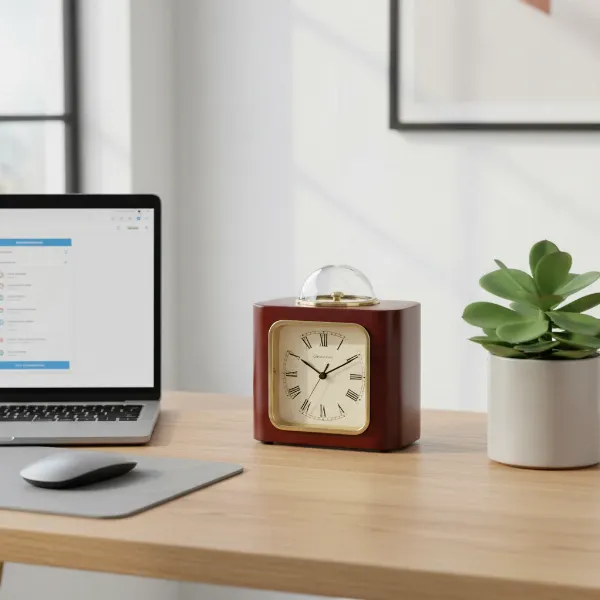
A desk clock is more than just a time-telling device; it’s a statement piece that can enhance the ambiance and functionality of your living room or kitchen. In an age dominated by smartphones, the charm and practicality of a dedicated timepiece on your table or counter remain unmatched, offering both aesthetic appeal and convenient access to time. Whether you’re seeking a sophisticated accent for your living area or a practical gadget for your culinary space, choosing the right desk clock can significantly elevate your home. This guide will walk you through the most popular types, essential buying considerations, and maintenance tips to help you find the perfect desk clock to complement your lifestyle and decor.
Popular Desk Clock Types
Desk clocks come in a fascinating array of styles, each offering unique features and aesthetics. Understanding the differences between mechanical, digital, and alarm clocks will help you narrow down your choices for your living room or kitchen.
Mechanical Clocks
Mechanical desk clocks embody classic craftsmanship and a timeless elegance. These clocks typically operate using a wound spring that powers a system of gears, with some models also featuring pendulums. They often boast intricate designs and can become a focal point in a traditionally styled living room or study.
- Advantages: Mechanical clocks offer a rich, historical aesthetic that can add a touch of sophistication to any space. Many do not rely on electricity, meaning they continue to function during power outages. Their construction often highlights superior craftsmanship and durability, making them cherished heirlooms.
- Disadvantages: These clocks typically require regular manual winding to maintain accurate time. They can be more delicate and may require professional oiling every few years to ensure smooth operation. Some mechanical clocks might produce an audible ticking sound, which some find distracting.
- How They Work and Maintenance: The mainspring is wound, slowly releasing energy to turn the gears and move the hands. Maintenance involves careful handling, keeping them away from extreme temperatures and humidity, and professional servicing for oiling and cleaning every few years to prevent wear on the internal components.
- Notable Examples: High-end models from brands like Howard Miller often feature mechanical movements, showcasing polished brass, rich woods, and Roman numerals that evoke a sense of grandeur.
|
Our Picks for the Best Desk clock in 2026
As an Amazon Associate I earn from qualifying purchases.
|
||
| Num | Product | Action |
|---|---|---|
| 1 | DreamSky Digital Alarm Clocks for Bedrooms - Wooden Desk Clock with Date, Day of Week, USB Port, Temperature, Dimmer for Bedside Table, Living Room, Office, Adjustable Volume, Auto DST, Wood Decor |

|
| 2 | AYRELY® 4.5" Analog Alarm Clock,Small Retro Desk Clock Battery Operated,Slient Metal Table Clock with Light for Living Room Decor,Bedroom,Bedside,Shelf (Orange-Yellow) |
|
| 3 | Amazon Basics Small Digital Oval Alarm Clock with LED Display, Nightlight, Snooze Function & Battery Backup, Black, 4.5 x 3.5 x 2.4 Inches |
|
| 4 | Netzu 3-in-1 Digital Clocks for Living Room with Temperature, Date & Time Display - 4 Levels Birghtness, 3 Volumes, Small & Compact Plug-in Alarm Clock for Bedroom, Office (Black) |
|
| 5 | Peakeep Large Display Digital Alarm Clock for Bedrooms, Date Day of Week Calendar Desk Table Clocks for Living Room Office, Dimmable Plug in Electric Clock, 5 Volumes, Loud, Auto DST |
|
| 6 | DreamSky Wooden Digital Alarm Clock for Bedroom - Desk Clock for Living Room with Large Numbers, Dimmer, Loud Alarm for Heavy Sleepers with Volume Control, DST, Office Wood Decor (Plug in Clock) |
|
| 7 | Clock with Day and Date for Elderly, 7" Large Display Digital Calendar Day Clock with 20 Custom Alarms and Medicine Reminders, Dimmable Dementia Alzheimers Clocks for Seniors, Black (Ac Powered) |
|
| 8 | Peakeep Slim Digital Mirror Aesthetic Alarm Clock for Bedrooms Desk Decor - Plug in Electric Big LED Modern Small Clock for Office Living Room, Battery Backup, 6 Dimmers (Gold) |
|
| 9 | Sharp Digital Alarm Clock with Keyboard Style Controls, Battery Back-up, Easy to Use with Simple Operation, Black Case with Red LED Display |
|
| 10 | AYRELY® 4.5" Analog Alarm Clock,Small Retro Desk Clock Battery Operated,Slient Metal Table Clock with Light for Living Room Decor,Bedroom,Bedside,Shelf (Blue) |
|
Digital Clocks
Digital desk clocks represent modern convenience, offering precise timekeeping and a host of additional features through electronic displays. These clocks are particularly popular in contemporary homes and highly functional kitchens due to their easy readability and multi-tasking capabilities.
- Advantages: Digital clocks provide exact time down to the second, often with illuminated displays that are easy to read in various lighting conditions, including low light. Many models come packed with extra features such as alarms, timers, date and day displays, temperature and humidity readings, and even USB charging ports for devices. They are generally low-maintenance and highly accurate.
- Disadvantages: Their electronic nature means most digital clocks require a consistent power source, either batteries or an AC adapter. While many offer battery backups, a power disruption can still impact their functionality. Some prefer the aesthetic of analog displays over the numeric digits of digital clocks.
- Smart Features: Advanced digital clocks may include features like automatic brightness adjustment, voice control, multiple alarm settings with varying sounds, and even wireless charging pads. Brands like MOSITO, DreamSky, JALL, and USCCE offer a range of digital clocks with these smart functionalities, blending seamlessly into a connected home environment.
Alarm Clocks
While alarm functionality is often integrated into both mechanical and digital desk clocks, dedicated alarm clocks offer specific features tailored for waking up or reminding you of important tasks. These are indispensable in a living space where schedules are important, or in a kitchen for timing cooking.
- Advantages: Alarm clocks offer reliability for waking up or managing tasks. Many provide snooze functions, adjustable alarm volumes, and a variety of alarm sounds. Digital alarm clocks often include multiple programmable alarms, catering to different weekday and weekend schedules.
- Disadvantages: The primary disadvantage can be the noise, which might be disruptive if the clock is placed in a high-traffic area. Basic models may lack aesthetic appeal or additional smart features.
- Choosing the Right Alarm: Consider features like gradual volume increase for a gentle wake-up, nightlight options for visibility in the dark (like the JALL Circular Analog Alarm Clock), and ease of turning off the alarm, especially for groggy mornings. The DreamSky Digital Alarm Clock, for instance, offers a large display for easy reading and multiple brightness settings.
Desk Clock Buying Guide
Selecting the perfect desk clock for your living room or kitchen involves more than just picking one that tells time. It’s about finding a piece that harmonizes with your decor, meets your functional needs, and fits your budget.
Determine Your Usage Needs
Before diving into styles, consider the primary role your desk clock will play.
- Purpose of Use: Are you looking for a decorative accent to tie a room together, a reliable alarm to keep you on schedule, or a functional timepiece with extra features? For a living room, aesthetics might be paramount, while in a kitchen, readability and features like timers or temperature displays could be more important.
- Placement: Consider where the clock will sit. A compact model might be ideal for a small kitchen counter or a busy side table, while a larger, more prominent design could anchor a spacious mantelpiece or an expansive console table in the living room.
- Budget: Desk clocks vary widely in price, from affordable basic models to luxurious statement pieces. Set a realistic budget beforehand, keeping in mind that high-quality materials and advanced features usually come with a higher price tag.
Choose the Right Clock Type
Once you understand your needs, select a type that aligns with your preferences.
- Style and Design: The clock’s style should complement your existing decor.
- Vintage/Retro: Features ornate details, Roman numerals, and materials like brass or wood, perfect for traditional or antique-themed spaces.
- Modern/Minimalist: Characterized by clean lines, geometric shapes, and materials such as metal, glass, or polished wood. These blend well with contemporary and Scandinavian aesthetics. The Driini Modern Mid Century Analog Clock is an example of a minimalist design.
- Novelty: Unique shapes or themes can add a playful touch to a specific area.
- Material: The material impacts both the clock’s look and durability.
- Wood: Offers warmth and traditional elegance.
- Metal (e.g., brushed silver, brass): Provides a sleek, modern, or industrial feel.
- Glass/Crystal: Exudes luxury and works well in formal settings.
- Plastic/Resin: Often found in more casual, budget-friendly, or modern designs.
- Features: Beyond basic timekeeping, what else do you need?
- Alarms: Essential for time management.
- Temperature/Humidity Display: Useful for environmental awareness, particularly in a kitchen or a room with specific climate control needs.
- USB Charging Ports: Convenient for charging devices, reducing clutter.
- Silent Operation: Crucial for bedrooms or quiet living spaces to avoid distracting ticking sounds, a feature found in many quartz and digital clocks like the JALL Circular Analog.
- Power Source: Most desk clocks are battery-powered or electric (AC adapter). Battery-operated clocks offer placement flexibility, while electric clocks avoid battery replacements, often with battery backup for power outages.
Compare Prices and Purchase
When ready to buy, look for reputable stores or online retailers that specialize in clocks or home decor. Compare features, materials, and prices across different models to ensure you’re getting the best value. Always check product reviews for insights into reliability and customer satisfaction.
Comparison Table: Popular Desk Clock Examples
| Brand/Model | Type | Key Advantages | Key Disadvantages | Ideal Placement |
|---|---|---|---|---|
| MOSITO Digital Wooden Alarm Clock | Digital | Wireless charging, adjustable brightness/volume, temperature display, modern wood aesthetic. | Alarm off mechanism can be tricky. | Bedroom, Modern Living Room, Office |
| DreamSky Digital Alarm Desk Clock | Digital | Large display, USB charging, date/day/temp display, battery backup, auto-sets time. | Auto-set may not adjust for time zone. | Kitchen, Office, Living Room |
| JALL Circular Analog Alarm Clock | Analog | Silent hands, warm nightlight, classic design, budget-friendly. | Battery operated, no advanced features. | Bedroom, Traditional Living Room |
| Driini Modern Mid Century Analog Clock | Analog | Minimalist design, durable stone-based polyresin, elegant, battery-operated. | No lights, alarms, or additional features. | Modern Living Room, Study |
| Howard Miller Audra Alarm Table Clock | Mechanical/Quartz | Timeless carriage style, brass finish, Roman numerals, quiet movement, alarm. | Higher price point, classic aesthetic may not suit all. | Classic Living Room, Library, Office |
Tips for Using and Maintaining Desk Clocks
Proper care ensures your desk clock remains a beautiful and functional addition to your home for years to come.
Clean Your Clock Correctly
Regular cleaning is vital, but the method depends on the clock’s material.
- Dusting: Use a soft, clean, cotton-based cloth for routine dusting. Avoid using cleaners containing wax unless specifically designed for the clock’s finish.
- Brass Components: Clean delicate brass parts with a soft cotton cloth only. Never use abrasive cleaners or sprays directly on brass, as these can cause damage or corrosion. Wipe away fingerprints promptly, as oils can harm the finish.
- Glass Components: When cleaning glass, spray a non-ammonia glass cleaner onto a soft cloth first, then gently wipe the glass. Never spray directly onto the glass surface, as it can seep into the clock’s inner workings or leave a cloudy residue.
- Wood Cases: Use a good furniture polish or paste wax, applying it to a soft cloth rather than directly to the case. Avoid silicone-based products unless specified.
Care and Preservation Tips
Protect your investment by following these guidelines for long-term care.
- Avoid Extreme Conditions: Clocks are sensitive to their environment. Keep your desk clock away from direct sunlight, which can fade finishes, and areas with large fluctuations in temperature and humidity (aim for around 21°C and 35-50% humidity). Extreme conditions can cause metal to corrode or wood to warp.
- Careful Handling: When moving a clock, always do so with care. Grasp it from strong, secure areas, not from delicate appendages or decorative elements. If it’s a mechanical clock with a pendulum, ensure the pendulum is secured or removed before moving to prevent internal damage.
- Battery Management: For battery-operated clocks, change batteries twice a year, even if they’re still working. This prevents batteries from leaking and damaging the clock’s internal components once they die.
- Professional Servicing: Mechanical clocks, especially antique ones, benefit from professional oiling every two to three years and a thorough cleaning every five to ten years, depending on environmental conditions. Never attempt to oil the clock’s movement yourself, as improper lubrication can cause significant damage.
Conclusion
Choosing the best desk clock for your living room or kitchen involves balancing functionality with aesthetic appeal. Whether you prefer the classic charm of a mechanical analog clock, the modern convenience of a feature-rich digital display, or a combination for specific alarm needs, there’s a perfect timepiece waiting to enhance your home. By considering your usage needs, desired style, and committing to proper maintenance, your chosen desk clock will not only keep you on schedule but also serve as a cherished decorative element. What unique story will your next desk clock tell in your home?
Frequently Asked Questions
What makes a desk clock ideal for a living room?
For a living room, an ideal desk clock usually prioritizes aesthetic appeal and design that complements the existing decor. Often, analog or mechanical clocks with elegant materials like wood, brass, or glass are preferred for their timeless charm and ability to act as a stylish accent piece, sometimes featuring quiet movements.
What features are most beneficial in a kitchen desk clock?
In a kitchen, practicality and easy readability are key. Digital desk clocks with large, clear displays, integrated timers, temperature readouts, and perhaps even USB charging ports are highly beneficial. Durable, easy-to-clean materials like plastic, metal, or tempered glass are also advantageous for a kitchen environment.
Are digital or analog desk clocks more accurate?
Digital clocks are generally considered more accurate as they often rely on precise electronic circuits and can synchronize with atomic clocks, automatically adjusting for factors like daylight saving time. High-quality quartz analog clocks are also very accurate, but mechanical analog clocks can be less precise and require more frequent adjustment.
How often should I clean my desk clock?
Routine dusting with a soft, dry cloth should be done regularly, perhaps weekly, to prevent dust buildup. More thorough cleaning of specific components like glass or brass can be done every few months or as needed, following the material-specific guidelines to avoid damage.
Can desk clocks survive in humid environments like a kitchen?
While some materials are more resilient, extreme humidity can negatively affect all types of clocks. Metal parts can corrode, and wooden cases can warp. If placing a clock in a high-humidity area like a kitchen, look for models made from moisture-resistant materials or ensure the area is well-ventilated to protect the clock.