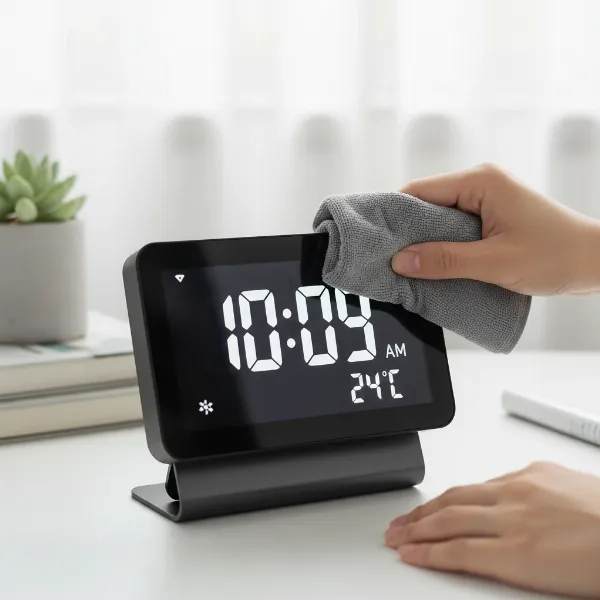
In an era dominated by smartphones and smartwatches, the humble desk clock or table clock might seem like a relic of the past. Yet, these timeless pieces continue to hold a special charm, blending functionality with aesthetic appeal that digital screens often cannot replicate. Whether you’re seeking a steadfast timekeeper for your workspace or a captivating decorative accent for your living room, selecting the perfect clock requires careful consideration. Interestingly, the terms “desk clock” and “table clock” are often used interchangeably, both referring to compact timepieces designed to adorn flat surfaces and enhance any room’s ambiance. This guide will navigate the fascinating world of desk clocks, helping you discern the various types, understand crucial buying factors, and ensure your chosen timepiece not only tells time but also tells a story.
Popular Types of Desk Clocks
Desk clocks come in a diverse array of designs and mechanisms, each offering a unique blend of style and functionality. Understanding these fundamental types is the first step toward finding your ideal timekeeping companion.
Mechanical Clocks
Mechanical clocks embody traditional craftsmanship, appealing to those who appreciate intricate engineering and a classic aesthetic.
- Pros and Cons: The primary advantage of a mechanical clock lies in its timeless design and the artistry involved in its creation. These clocks often feature ornate details, classic analog displays with Roman or Arabic numerals, and a distinctive ticking sound that some find soothing. They operate without electricity, relying on springs and gears, which means they continue to function during power outages. However, mechanical clocks require regular manual winding, typically once a week for 8-day movements, and can be more delicate, needing professional servicing every few years to maintain accuracy [2 – premier clocks, 4 – at home].
- How They Work and Basic Maintenance: Mechanical clocks utilize a complex system of gears, springs, and sometimes a pendulum to keep time. Energy is stored in a mainspring when wound, which then slowly releases to power the movement. Basic maintenance includes careful handling, protecting from extreme temperature and humidity fluctuations, and regular winding [1 – maintenance, 4 – at home, 5 – more clock]. Professional oiling every two to three years and a thorough cleaning every five to ten years are recommended to ensure longevity and precise timekeeping [3 – how to clean, 4 – at home].
- Notable Brands and Features: Brands like Hermle are renowned for their mechanical table clocks, often featuring Westminster chimes and intricate designs. These clocks are celebrated for their heritage and the rhythmic presence they bring to a space [1 – luxury, 2 – mantel & desk].
|
Our Picks for the Best Desk clock in 2026
As an Amazon Associate I earn from qualifying purchases.
|
||
| Num | Product | Action |
|---|---|---|
| 1 | DreamSky Wooden Digital Alarm Clock for Bedroom - Desk Clock for Living Room with Large Numbers, Dimmer, Loud Alarm for Heavy Sleepers with Volume Control, DST, Office Wood Decor (Plug in Clock) |

|
| 2 | AYRELY® 4.5" Analog Alarm Clock,Small Retro Desk Clock Battery Operated,Slient Metal Table Clock with Light for Living Room Decor,Bedroom,Bedside,Shelf (Blue) |
|
| 3 | Peakeep Slim Digital Mirror Aesthetic Alarm Clock for Bedrooms Desk Decor - Plug in Electric Big LED Modern Small Clock for Office Living Room, Battery Backup, 6 Dimmers (Gold) |
|
| 4 | Sharp Digital Alarm Clock with Keyboard Style Controls, Battery Back-up, Easy to Use with Simple Operation, Black Case with Red LED Display |
|
| 5 | Peakeep Large Display Digital Alarm Clock for Bedrooms, Date Day of Week Calendar Desk Table Clocks for Living Room Office, Dimmable Plug in Electric Clock, 5 Volumes, Loud, Auto DST |
|
| 6 | Amazon Basics Small Digital Oval Alarm Clock with LED Display, Nightlight, Snooze Function & Battery Backup, Black, 4.5 x 3.5 x 2.4 Inches |
|
| 7 | Netzu 3-in-1 Digital Clocks for Living Room with Temperature, Date & Time Display - 4 Levels Birghtness, 3 Volumes, Small & Compact Plug-in Alarm Clock for Bedroom, Office (Black) |
|
| 8 | Clock with Day and Date for Elderly, 7" Large Display Digital Calendar Day Clock with 20 Custom Alarms and Medicine Reminders, Dimmable Dementia Alzheimers Clocks for Seniors, Black (Ac Powered) |
|
| 9 | AYRELY® 4.5" Analog Alarm Clock,Small Retro Desk Clock Battery Operated,Slient Metal Table Clock with Light for Living Room Decor,Bedroom,Bedside,Shelf (Orange-Yellow) |
|
| 10 | DreamSky Digital Alarm Clocks for Bedrooms - Wooden Desk Clock with Date, Day of Week, USB Port, Temperature, Dimmer for Bedside Table, Living Room, Office, Adjustable Volume, Auto DST, Wood Decor |
|
Digital Clocks
Digital clocks represent modern convenience, offering precise timekeeping and a host of additional features.
- Pros and Cons: Digital clocks display time numerically, typically on LED or LCD screens, making them exceptionally easy to read at a glance, even in low-light conditions due to backlighting [1 – fankaarlok, 3 – orpat, 4 – bigtimeclocks]. They are highly accurate, often synchronizing with atomic clocks, and many come packed with useful features like multiple alarms, timers, date, day of the week, temperature, humidity, and even USB charging ports [1 – fankaarlok, 2 – calendar, 5 – premier clocks (types)]. The main drawback is their reliance on electricity or batteries, though many plug-in models offer battery backup for continuous operation during power cuts [4 – how to choose].
- Smart Features and Modern Functionalities: Beyond basic time, modern digital clocks can forecast weather, track lunar cycles, and even integrate smart home features. Some designs are compact and minimalist, blending seamlessly into contemporary workspaces [1 – digital best, 2 – digital best]. They provide immediate readability, eliminating any guesswork about the exact minute [4 – best desk clocks date].
- Popular Brands and Examples: Brands like JALL, MOSITO, DreamSky, Howard Miller, and La Crosse Technology offer a wide range of digital desk clocks with varying features, from simple alarm functions to comprehensive weather stations [1 – digital best, 2 – digital best, 5 – digital best].
Alarm Clocks
Alarm functionality is a common and highly valued feature found in both analog and digital desk clocks.
- Importance and Variations: An alarm clock is indispensable for managing schedules and ensuring timely starts to the day. Digital alarm clocks often provide dual alarms, snooze functions, and adjustable volume settings [2 – digital best, 5 – digital best]. Some feature dimmable displays to avoid disturbing sleep, while others offer soothing nature sounds or projection capabilities [5 – digital best]. Analog alarm clocks typically offer simpler chime or bell alarms, often with a manual stop function, providing a straightforward and reliable wake-up call [1 – digital best].
How to Choose the Perfect Desk Clock
Selecting the right desk clock involves more than just picking a design; it’s about matching the timepiece to your lifestyle, decor, and specific needs.
Define Your Needs
Before exploring styles and features, consider the primary role your clock will play.
- Purpose of Use: Are you looking for a functional tool to keep track of work hours, a reliable alarm to start your day, or purely a decorative piece to enhance your interior? A clock for a busy office might prioritize features like a date display and timers, while a clock for a bedside table might focus on silent operation and adjustable backlighting [1 – how to choose].
- Placement of the Clock: The location greatly influences the ideal size, style, and features. A compact clock suits a small desk, while a larger, more prominent piece might be better for a console table or a spacious office [2 – how to choose, 4 – how to choose]. For bedrooms, silent movements and subtle lighting are key, whereas a living room clock might prioritize aesthetic impact [1 – how to choose].
- Budget: Desk clocks vary widely in price, from affordable, functional digital models to high-end mechanical pieces that are considered investments. Determine your budget to narrow down options and ensure you find a clock that offers the best value for your money [1 – mclocks].
Select Movement & Display
The clock’s mechanism and how it displays time are crucial choices impacting accuracy, maintenance, and overall experience.
- Analog (Mechanical/Quartz) vs. Digital (LED/LCD): Analog clocks, whether mechanical or quartz-powered, offer a classic visual appeal with hands moving across a dial. They contribute to a more traditional or elegant decor. Digital clocks, with their numerical displays, provide immediate and precise time reading, often with additional information at a glance [3 – how to choose]. Quartz movements are battery-operated, highly accurate, and require minimal upkeep, making them a practical choice for most [2 – premier clocks (movement)].
- Readability and Visibility: For practical use, especially in a workspace, clear and easily readable numbers or markers are essential. Digital displays often excel here with large, bold characters and adjustable brightness [4 – best desk clocks date]. Analog clocks benefit from distinct hands and contrasting dials to ensure legibility from a distance [1 – fankaarlok].
Consider Style & Material
The clock’s design and construction material play a significant role in how it complements your existing decor.
- Matching Your Decor: Desk clocks come in styles ranging from classic mantel-style to modern minimalist, vintage, and even novelty designs. Choose a style that harmonizes with your office or room’s aesthetic. A sleek, contemporary clock might fit a minimalist setup, while a warm wooden clock could enhance a traditional or rustic space [2 – premier clocks (style), 4 – how to choose].
- Common Materials:
- Wood: Offers warmth and traditional elegance, suitable for classic or rustic interiors [5 – dusaan].
- Metal: Provides a sleek, modern, or industrial vibe, often seen in contemporary designs [5 – dusaan].
- Glass/Crystal: Exudes luxury and works well in formal settings, adding a touch of sophistication [5 – dusaan].
- Plastic/Acrylic: Great for playful, casual setups, or children’s rooms, often found in more modern and colorful designs [5 – dusaan].
Additional Features
Many desk clocks now integrate a variety of features that extend beyond simple timekeeping.
- Alarms, Date, and Temperature Displays: These are common additions, providing enhanced utility. Digital clocks frequently offer calendar functions, showing the day, date, and month, along with indoor temperature and humidity [1 – fankaarlok, 2 – calendar].
- USB Charging Ports and Smart Connectivity: For modern workspaces, USB charging ports on a desk clock can be incredibly convenient for powering smartphones and other devices. Some advanced digital clocks even offer smart connectivity for greater control and integration with other smart devices [5 – dusaan].
Comparison Table: Popular Desk Clock Models
| Type | Movement | Key Features | Pros | Cons |
|---|---|---|---|---|
| Digital | Quartz | LED/LCD display, multiple alarms, date, temperature, USB charging | High accuracy, easy readability, versatile features, often backlit | Relies on power/batteries, some designs may lack classic aesthetic |
| Mechanical | Mechanical | Analog display, manual winding, chimes (optional), intricate gears | Timeless elegance, craftsmanship, operates without electricity | Requires regular winding, delicate, typically no extra modern features |
| Analog (Quartz) | Quartz | Analog display, often silent sweep, basic alarm | Classic look, reliable accuracy, low maintenance, battery efficient | Fewer features than digital, can be harder to read in low light |
Tips for Using and Maintaining Your Desk Clock
Proper care ensures your desk clock remains a functional and beautiful addition to your space for years to come.
Proper Cleaning
Regular and careful cleaning is essential to preserve the appearance and functionality of your clock.
- Case Care: For dusting, use a soft, clean cloth. Avoid harsh abrasive cleaners or sprays, which can damage finishes. If your clock has a wooden case, use a good furniture polish or paste wax, applying it to the cloth first, rather than directly to the wood [3 – how to clean]. For brass components, wipe gently with a soft cotton cloth and avoid polishing agents that could seep into the movement [2 – maintenance].
- Glass Care: When cleaning glass panels, spray your liquid non-ammonia glass cleaner onto a soft cloth, then wipe the glass gently. Never spray directly onto the glass, as this can leave streaks or damage nearby components [2 – maintenance, 3 – how to clean].
Long-Term Care
Beyond routine cleaning, certain practices will extend your clock’s lifespan.
- Environmental Factors: Clocks can be sensitive to their environment. Aim to keep your clock in a stable environment, ideally around 21 degrees Celsius (70°F) with relative humidity between 35-50 percent. Extreme fluctuations can cause materials to corrode or warp, especially for wooden clocks [1 – maintenance].
- Mechanical Clock Specifics: For mechanical clocks, consistent winding is crucial; try to wind it fully once a week, ideally on the same day, to prevent the movement from jamming [4 – at home, 5 – more clock]. Never attempt to oil the clock’s intricate internal mechanisms yourself; this delicate task should be performed by a professional clockmaker every few years [2 – maintenance, 4 – at home].
- Battery Replacement Frequency: For battery-operated quartz clocks, it’s a good practice to replace the batteries twice a year. This prevents old batteries from leaking and potentially damaging the internal components [2 – maintenance].
“A well-chosen desk clock is more than just a tool for telling time; it’s a reflection of your personal style and a quiet anchor in your daily routine.”
Conclusion
Choosing between the diverse world of desk clocks, whether a classic mechanical piece or a feature-rich digital model, ultimately comes down to a thoughtful consideration of your needs, style, and desired functionality. From defining its purpose and selecting the right movement to embracing a design that complements your decor, each decision brings you closer to a timepiece that enhances your space. By understanding the options and following simple care guidelines, your desk clock will not only keep you punctual but also serve as a cherished element of your home or office for years to come. Which type of desk clock will become the next focal point of your personal space?
Câu Hỏi Thường Gặp
What is the primary difference between a desk clock and a table clock?
While the terms “desk clock” and “table clock” are often used interchangeably, both refer to compact timepieces designed to sit on any flat surface, such as a desk, nightstand, or shelf. Functionally, there is no strict distinction; the difference often lies in marketing or the specific design’s intended aesthetic placement.
Are mechanical clocks accurate enough for daily use?
Modern mechanical clocks, especially well-maintained ones, can offer good accuracy. However, they are generally less precise than quartz or atomic digital clocks, which are accurate to the second. Mechanical clocks require regular winding and professional servicing to maintain optimal timekeeping.
Can a digital desk clock fit into a formal office setting?
Absolutely. Many digital desk clocks feature sleek, minimalist designs with understated materials like wood or brushed metal, making them perfectly suitable for formal office environments. Look for models with clear, non-distracting displays and sophisticated finishes to blend seamlessly with professional decor.
How often should I clean my desk clock?
For general dusting, a soft cloth can be used weekly. For more thorough cleaning of the case, follow the manufacturer’s recommendations, typically using a gentle furniture polish for wood or a non-abrasive cleaner for other materials, applied to a cloth. Mechanical clocks require professional cleaning and oiling every 5-10 years.
What are the benefits of a silent desk clock?
A silent desk clock, typically a quartz analog or most digital models, offers the benefit of no audible ticking sound. This is particularly advantageous for quiet environments like bedrooms, studies, or offices, where the constant tick-tock of a mechanical clock might be distracting or disruptive.