In a world filled with digital distractions, the humble desk clock often goes overlooked. Yet, this essential timepiece can be a powerful tool for maintaining focus, enhancing your workspace aesthetic, and ensuring you stay on schedule without the constant pull of your smartphone. Whether you’re seeking a classic design that whispers sophistication or a smart device packed with modern conveniences, choosing the right desk clock involves understanding the diverse features and benefits available. This comprehensive guide delves into the various types, outlines key buying considerations, and provides essential maintenance tips to help you find a desk clock that perfectly complements your needs and style.
Popular Types of Desk Clocks
Desk clocks come in an impressive array of designs and functionalities, each offering a unique blend of form and purpose. From the intricate artistry of mechanical movements to the sleek efficiency of digital displays, understanding these categories is the first step in discovering your ideal timepiece.
Mechanical Clocks
Mechanical desk clocks embody timeless craftsmanship and intricate engineering. These traditional timepieces operate without batteries or electricity, relying instead on a system of gears, springs, and escapements that are manually wound. Many enthusiasts appreciate their visible inner workings and the subtle, rhythmic ticking sound that adds a classic ambiance to any desk.
- Pros: Mechanical clocks are often considered heirloom pieces due to their durable construction and classic aesthetic. They offer a unique connection to horological history and can serve as exquisite decorative items. Brands like Howard Miller and Hermle continue to produce beautifully crafted mechanical clocks, blending traditional techniques with modern practices. Luxury watchmakers such as Cartier and Jaeger-LeCoultre also offer high-end mechanical desk clocks, often with impressive power reserves.
- Cons: While charming, mechanical clocks typically require more maintenance, including regular winding (often daily or weekly) and professional servicing every few years. They are generally less accurate than their quartz counterparts, often losing or gaining several seconds a day. Their intricate mechanisms also mean they usually come with a higher price tag.
- How They Work and Maintenance: A mainspring, when wound, provides the power, which is then regulated by the escapement and gears to move the hands. Maintenance involves consistent winding, protecting them from extreme temperatures and humidity, and avoiding strong magnetic fields. Professional cleaning and oiling every five to ten years are recommended to ensure longevity.
|
Our Picks for the Best Desk clock in 2026
As an Amazon Associate I earn from qualifying purchases.
|
||
| Num | Product | Action |
|---|---|---|
| 1 | DreamSky Digital Alarm Clocks for Bedrooms - Wooden Desk Clock with Date, Day of Week, USB Port, Temperature, Dimmer for Bedside Table, Living Room, Office, Adjustable Volume, Auto DST, Wood Decor |

|
| 2 | Sharp Digital Alarm Clock with Keyboard Style Controls, Battery Back-up, Easy to Use with Simple Operation, Black Case with Red LED Display |
|
| 3 | AYRELY® 4.5" Analog Alarm Clock,Small Retro Desk Clock Battery Operated,Slient Metal Table Clock with Light for Living Room Decor,Bedroom,Bedside,Shelf (Orange-Yellow) |
|
| 4 | Netzu 3-in-1 Digital Clocks for Living Room with Temperature, Date & Time Display - 4 Levels Birghtness, 3 Volumes, Small & Compact Plug-in Alarm Clock for Bedroom, Office (Black) |
|
| 5 | Clock with Day and Date for Elderly, 7" Large Display Digital Calendar Day Clock with 20 Custom Alarms and Medicine Reminders, Dimmable Dementia Alzheimers Clocks for Seniors, Black (Ac Powered) |
|
| 6 | AYRELY® 4.5" Analog Alarm Clock,Small Retro Desk Clock Battery Operated,Slient Metal Table Clock with Light for Living Room Decor,Bedroom,Bedside,Shelf (Blue) |
|
| 7 | Peakeep Slim Digital Mirror Aesthetic Alarm Clock for Bedrooms Desk Decor - Plug in Electric Big LED Modern Small Clock for Office Living Room, Battery Backup, 6 Dimmers (Gold) |
|
| 8 | Peakeep Large Display Digital Alarm Clock for Bedrooms, Date Day of Week Calendar Desk Table Clocks for Living Room Office, Dimmable Plug in Electric Clock, 5 Volumes, Loud, Auto DST |
|
| 9 | Amazon Basics Small Digital Oval Alarm Clock with LED Display, Nightlight, Snooze Function & Battery Backup, Black, 4.5 x 3.5 x 2.4 Inches |
|
| 10 | DreamSky Wooden Digital Alarm Clock for Bedroom - Desk Clock for Living Room with Large Numbers, Dimmer, Loud Alarm for Heavy Sleepers with Volume Control, DST, Office Wood Decor (Plug in Clock) |
|
Digital Clocks
Digital desk clocks offer a modern, often minimalist approach to timekeeping, prioritizing clarity and a host of convenient features. They typically use quartz movements, making them highly accurate and low-maintenance. Their displays, often LED or LCD, make reading the time effortless, even from a distance.
- Pros: Digital clocks are exceptionally accurate, losing or gaining only a few seconds per month. They are incredibly versatile, frequently integrating additional features like date, day of the week, indoor temperature, humidity, and multiple alarm settings. Many models offer adjustable brightness levels, making them suitable for various lighting conditions, and some even include USB charging ports for other devices. Brands like JALL, MOSITO, DreamSky, American Lifetime, AcuRite, Bulova, and Seiko offer a wide range of digital desk clocks.
- Cons: Some users find the aesthetic of digital clocks less traditional or warm compared to analog designs. A bright display can be disruptive in a dark room if the dimmer settings are not sufficient. They are also reliant on a power source, usually AC with battery backup, meaning they won’t function without power if a backup isn’t present or charged.
- Smart Features: Modern digital clocks often include smart functionalities such as radio-controlled time synchronization, dual alarms, snooze features, and even weather station capabilities. Advanced models can offer wireless connectivity, allowing for app control, integration with smart home systems, and even sunrise simulation alarms.
Alarm Clocks
While not a separate category in themselves, alarm clocks represent a critical functionality often integrated into both analog and digital desk clocks. Their primary role is, of course, to wake you up, but the sophistication of their alarm features has evolved considerably.
- Pros: Modern alarm clocks offer diverse wake-up experiences. Beyond simple beeps, you can find models with gradual volume increases, nature sounds, radio alarms, and even “sunrise simulation” lights that slowly brighten your room to mimic dawn. For heavy sleepers, options include extra-loud alarms or vibrating attachments. Many provide multiple alarm settings for different days of the week or purposes.
- Cons: Overly complex alarm settings can be frustrating to program, especially for those who prefer simplicity. Some loud alarms can be jarring, while overly gentle ones might not be effective for deep sleepers. If not well-designed, the display of an alarm clock can be too bright for a bedroom environment.
- Choosing the Right Alarm Clock: Consider your sleep style. Heavy sleepers might benefit from loud, multi-tone alarms or bed shakers, while light sleepers may prefer sunrise simulation or gentle nature sounds. Features like adjustable snooze times, dual alarms (for setting two separate wake-up times), and dimmable displays are also important. Brands like Hatch Restore, Loftie, JALL, and DreamSky are popular for their diverse alarm functionalities.
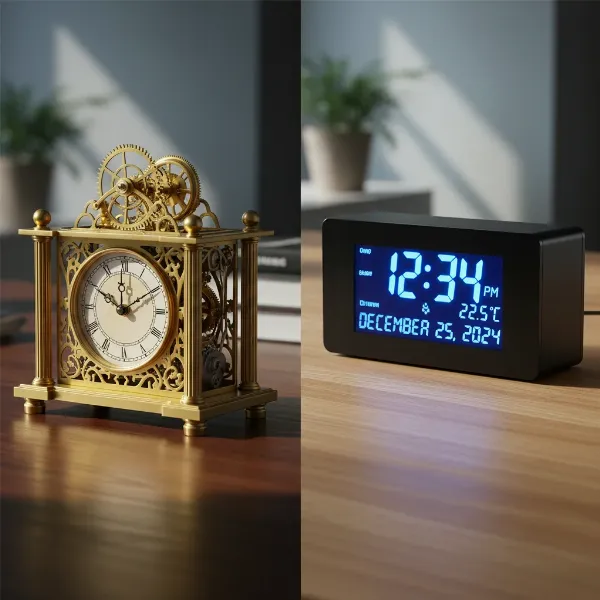 A side-by-side comparison of a vintage mechanical desk clock and a modern digital desk clock on a minimalist wooden desk.
Desk Clock Buying Guide
Choosing the perfect desk clock involves more than just picking a design you like. It requires a thoughtful assessment of your personal needs, the clock’s intended environment, and the features that will genuinely enhance your daily routine.
Determining Your Needs
Before diving into models, consider why you need a desk clock.
- Purpose of Use: Is it primarily for telling time at a glance to boost productivity in your office? Do you need a reliable alarm for your bedroom? Or is it largely a decorative piece to elevate your interior design? For productivity, a clear, easily readable display with optional timer features might be best. For bedrooms, dimmable displays and effective alarm functions are crucial.
- Placement of the Clock: Will it sit on a spacious executive desk, a small nightstand, or a minimalist shelf? Consider its size and footprint. A large, feature-rich clock might be overwhelming on a small surface, while a tiny one could get lost on a large desk.
- Budget: Desk clocks range from affordable, functional models to luxurious, artisan-crafted pieces. Establish a realistic budget before you start shopping to narrow down your options effectively. Remember that higher price often correlates with superior materials, craftsmanship, and advanced features.
Choosing the Right Type
Once your needs are clear, selecting the clock type becomes easier.
- Style and Aesthetics: Do you prefer the classic elegance of an analog clock with hands and Roman numerals, or the contemporary, minimalist look of a digital display? Analog clocks can offer a vintage or traditional feel, often with materials like wood, brass, or glass. Digital clocks are typically more modern, using materials like plastic, wood-grain finishes, or metal. Consider how the clock’s design and materials will integrate with your existing decor.
- Material: Materials impact both the look and durability. Wood offers warmth, metal provides a modern or industrial edge, and glass adds a touch of sophistication. Some clocks combine materials, like wood frames with digital displays.
- Features: Beyond basic time-telling, what else do you need?
- Display: Look for clarity, size of digits, and adjustable brightness. Some displays show more than just time, including date, day, temperature, and humidity.
- Power Source: Battery-powered clocks offer portability but require battery changes. AC-powered clocks are reliable for continuous use, often with battery backup. USB-powered clocks are convenient for modern workspaces.
- Additional Functions: Do you need a USB charging port, a calendar, a countdown timer for focused work, or a multi-zone temperature display?
Price Comparison and Purchase
Smart shopping can ensure you get the best value.
- Research Reputable Retailers: Look for established online stores or physical shops known for quality timepieces. Reading customer reviews can provide insights into product reliability and seller service.
- Compare Features and Prices: Don’t settle for the first clock you find. Compare similar models across different brands and retailers. Pay attention to the warranty and return policies.
- Inspect Product Quality: If possible, examine the clock in person. Check for sturdy construction, clear displays, smooth finishes, and responsive buttons. For mechanical clocks, listen to the tick and observe the hand movement.
Comparison Table of Popular Desk Clocks
To help you visualize the choices, here’s a comparison of a few notable desk clock types and brands:
| Brand | Model | Pros | Cons | Price Range (Approx.) |
|---|---|---|---|---|
| JALL | Wooden Digital Alarm Clock | Aesthetic wooden design, clear LED display, temperature/humidity, multiple alarms, adjustable brightness | Sound not adjustable, can be too bright in dark rooms | $20 – $40 |
| DreamSky | Digital Alarm Desk Clock | Large display, date/temp/day, USB charging, battery backup, auto-sets time | Plastic build may feel less premium | $25 – $50 |
| Howard Miller | Ambassador Table Clock | Classic elegant metal design, Roman numerals, precise quartz movement, durable | Basic functionality, no smart features, higher price | $100 – $300 |
| Hatch | Restore 3 Sunrise Alarm Clock | Sunrise simulation, soothing sounds, wind-down routines, app control, great sound quality | High price, requires app for full functionality, modern aesthetic only | $130 – $180 |
Tips for Using and Maintaining Your Desk Clock
Proper care ensures your desk clock remains a reliable and attractive fixture for years to come. Here are some essential tips for keeping your timepiece in pristine condition.
Correct Cleaning of Your Clock
Regular cleaning prevents dust and grime from affecting performance and appearance.
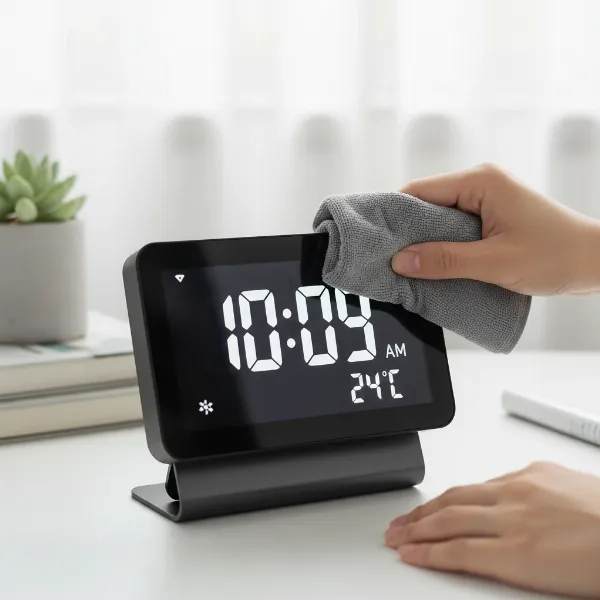
- Basic Cleaning Steps: Use a soft, dry microfiber cloth to gently wipe down the clock’s exterior. For mechanical clocks, avoid touching the intricate internal components. Dusting regularly, perhaps every few days, prevents buildup.
- Using Appropriate Cleaning Solutions:
- Glass: If your clock has a glass cover, spray a quality, non-ammonia glass cleaner onto a soft cloth first, then gently wipe the glass. Never spray directly onto the glass, as liquid can seep into the mechanism.
- Metal (Brass/Silver): For exposed metal parts, a soft, dry cloth is usually sufficient. Avoid abrasive cleaners or polishes, especially on brass, as they can damage the finish or seep into delicate inner workings. If you need to polish brass components, it’s often best to consult a professional or use a specialized brass cleaner very sparingly on a cloth, away from the clock’s movement.
- Wood: For wooden casings, use a good furniture polish or paste wax applied to a soft cloth, not directly to the wood. Avoid silicone-based products.
Storing Your Clock When Not in Use
Proper storage protects your clock from environmental damage and extends its lifespan.
- Avoid Direct Sunlight: Prolonged exposure to direct sunlight can fade finishes, warp wooden cases, and degrade digital displays over time. Place your clock in a spot where it receives indirect light.
- Prevent Exposure to Humidity and Extreme Temperatures: High humidity can lead to rust and tarnishing, especially on metal components. Extreme temperature fluctuations can affect mechanisms and materials. Keep your clock in a stable, moderate environment, away from heat sources like radiators or fireplaces, and cool sources like air conditioners. Using a dehumidifier in humid climates can be beneficial.
- Safe Placement: Always place your desk clock on a stable, level surface to prevent accidental falls or damage. If moving a mechanical clock, especially one with a pendulum, ensure the pendulum is secured or removed according to the manufacturer’s instructions. When storing for an extended period, remove batteries from quartz clocks to prevent leakage that can cause irreversible damage. Wrap valuable clocks in a soft cloth and place them in a protective box.
“A well-chosen desk clock is more than just a time-teller; it’s a statement of intentional living, a subtle reminder to be present and productive in your space.” – A. T. Reynolds, Horology Expert
Conclusion
The right desk clock can be a surprisingly influential element in your daily life, offering both practical utility and a touch of personal style. From the classic allure of mechanical timepieces to the modern convenience of feature-rich digital models, there’s a desk clock designed to meet every need and complement every aesthetic. By considering factors like purpose, placement, features, and embracing simple maintenance practices, you can select a timepiece that not only keeps you on schedule but also enhances your workspace or living area. Take the time to explore the options, and you’ll find a desk clock that truly resonates with your rhythm.
What features do you value most in a desk clock, and how do you envision it improving your daily routine?
Frequently Asked Questions
What are the main differences between mechanical and digital desk clocks?
Mechanical desk clocks rely on intricate gears and springs, requiring manual winding and offering a traditional aesthetic, though they are less accurate and more expensive. Digital desk clocks use quartz crystals and batteries or AC power, providing high accuracy, modern features like date/temperature displays, and are generally more affordable and low-maintenance.
How often should I wind a mechanical desk clock?
The winding frequency depends on the specific clock’s power reserve, but most mechanical desk clocks require winding daily or weekly. It’s best to check the manufacturer’s instructions for the precise recommendation to ensure consistent timekeeping.
Can I place a desk clock near my computer or other electronics?
While most modern digital clocks are fine near electronics, some delicate mechanical clocks can be affected by strong magnetic fields. It’s generally safe to place digital clocks near computers, but always ensure proper ventilation and avoid covering any cooling vents if the clock has charging features.
How do I prevent my digital desk clock’s display from being too bright at night?
Many digital desk clocks come with adjustable brightness settings, allowing you to dim the display for nighttime use. Some advanced models include automatic dimming based on ambient light or offer a “night mode” to prevent light disruption while you sleep.
Are there desk clocks with silent operation?
Yes, many digital desk clocks operate silently as they have no moving parts. For analog clocks, look for models advertised as “non-ticking” or “sweep movement,” which use a continuous second hand rather than a stepping one, eliminating the audible tick.
What features are beneficial for a desk clock in an office environment?
For an office, consider features like a clear, easy-to-read display, a reliable alarm or timer for managing tasks, a calendar function, and potentially a USB charging port. A professional or minimalist aesthetic that blends with your office decor is also often preferred.
How important is the power source for a desk clock?
The power source is crucial for reliability. Battery-powered clocks offer portability and freedom from cords but require regular battery replacement. AC-powered clocks provide continuous operation and are often backed up by batteries during power outages. Some modern clocks also use USB power, which is convenient for tech-integrated workspaces.