In a world filled with digital screens, the humble desk clock often gets overlooked, yet it remains an essential piece for managing time and enhancing your workspace. More than just a time-telling device, a thoughtfully chosen desk clock can elevate your decor, boost productivity, and even offer smart functionalities. Whether you’re seeking a timeless analog piece, a feature-rich digital display, or a reliable alarm companion, understanding the nuances of available options is key to making the perfect selection. This comprehensive guide will navigate through the diverse world of desk clocks, offering insights into types, buying considerations, and essential maintenance tips to help you choose a timepiece that truly fits your lifestyle and aesthetic.
Popular Desk Clock Types
The market for desk clocks is as diverse as the individuals who use them, offering a spectrum from classic elegance to cutting-edge technology. Each type presents unique advantages and characteristics, catering to different preferences and needs. From the intricate gears of a mechanical marvel to the crisp display of a smart digital device, understanding these distinctions is the first step in finding your ideal desk companion.
Mechanical Clocks
Mechanical desk clocks embody a timeless charm, often appealing to those who appreciate traditional craftsmanship and a vintage aesthetic. These clocks operate through an intricate system of springs, gears, and pendulums. While some mechanical clocks might feature a distinct “tick-tock” sound, modern versions often use silent quartz movements housed in traditional casings to provide the classic look without the audible reminder.
- Pros and Cons: The primary advantage of mechanical clocks lies in their aesthetic appeal and the tactile satisfaction of a classic design. Many are considered decorative pieces or heirlooms. However, they can be less accurate than their digital counterparts and may require more maintenance, such as regular winding for true mechanical movements, or professional oiling every few years for precise operation.
- How They Work and Maintenance: Traditional mechanical clocks rely on a mainspring and escapement mechanism, converting stored energy into precise timekeeping. Maintenance involves careful handling, protecting them from extreme temperature and humidity fluctuations, and avoiding direct sunlight. For intricate movements, professional cleaning and oiling are recommended every 5-10 years.
- Notable Brands: Brands like Howard Miller are known for their classic and refined analog clocks, often featuring wood finishes and traditional dials. Higher-end options from brands like Chopard offer luxurious, handcrafted mechanical timepieces.
|
Our Picks for the Best Desk clock in 2026
As an Amazon Associate I earn from qualifying purchases.
|
||
| Num | Product | Action |
|---|---|---|
| 1 | Peakeep Large Display Digital Alarm Clock for Bedrooms, Date Day of Week Calendar Desk Table Clocks for Living Room Office, Dimmable Plug in Electric Clock, 5 Volumes, Loud, Auto DST |

|
| 2 | Sharp Digital Alarm Clock with Keyboard Style Controls, Battery Back-up, Easy to Use with Simple Operation, Black Case with Red LED Display |
|
| 3 | Clock with Day and Date for Elderly, 7" Large Display Digital Calendar Day Clock with 20 Custom Alarms and Medicine Reminders, Dimmable Dementia Alzheimers Clocks for Seniors, Black (Ac Powered) |
|
| 4 | DreamSky Wooden Digital Alarm Clock for Bedroom - Desk Clock for Living Room with Large Numbers, Dimmer, Loud Alarm for Heavy Sleepers with Volume Control, DST, Office Wood Decor (Plug in Clock) |
|
| 5 | AYRELY® 4.5" Analog Alarm Clock,Small Retro Desk Clock Battery Operated,Slient Metal Table Clock with Light for Living Room Decor,Bedroom,Bedside,Shelf (Orange-Yellow) |
|
| 6 | AYRELY® 4.5" Analog Alarm Clock,Small Retro Desk Clock Battery Operated,Slient Metal Table Clock with Light for Living Room Decor,Bedroom,Bedside,Shelf (Blue) |
|
| 7 | DreamSky Digital Alarm Clocks for Bedrooms - Wooden Desk Clock with Date, Day of Week, USB Port, Temperature, Dimmer for Bedside Table, Living Room, Office, Adjustable Volume, Auto DST, Wood Decor |
|
| 8 | Netzu 3-in-1 Digital Clocks for Living Room with Temperature, Date & Time Display - 4 Levels Birghtness, 3 Volumes, Small & Compact Plug-in Alarm Clock for Bedroom, Office (Black) |
|
| 9 | Amazon Basics Small Digital Oval Alarm Clock with LED Display, Nightlight, Snooze Function & Battery Backup, Black, 4.5 x 3.5 x 2.4 Inches |
|
| 10 | Peakeep Slim Digital Mirror Aesthetic Alarm Clock for Bedrooms Desk Decor - Plug in Electric Big LED Modern Small Clock for Office Living Room, Battery Backup, 6 Dimmers (Gold) |
|
Digital Clocks
Digital desk clocks represent the modern evolution of timekeeping, prioritizing clear readability and a host of convenient features. These clocks typically display time using LED or LCD numbers and are powered by electricity, often with battery backup. They are a popular choice for contemporary spaces and tech-savvy individuals.
- Pros and Cons: Digital clocks excel in accuracy and ease of readability, displaying the exact time at a glance. Many come packed with smart features like multiple alarms, snooze functions, temperature and humidity displays, calendars, and even USB charging ports or wireless charging pads. Their sleek, compact designs fit well on most desks. On the downside, the illuminated display can sometimes be too bright in dark environments, and their modern aesthetic might not suit traditional decor.
- Smart Features: Beyond basic time, many digital clocks integrate smart functionalities. These can include adjustable brightness levels (dimmers), multiple alarm settings for different days, voice control (e.g., via Alexa in smart clock models), and connectivity options for charging other devices. Models like the MOSITO Digital Wooden Alarm Clock offer adjustable dimmers and temperature displays.
- Popular Brands: Brands such as JALL, MOSITO, and DreamSky are frequently highlighted for their user-friendly digital alarm clocks with features like clear displays, temperature readings, and USB charging.
Alarm Clocks
Alarm clocks are a specialized category, designed primarily to ensure punctual waking. While they can be either mechanical (analog) or digital, their core function is universally to provide an audible alert at a set time. They are indispensable for bedrooms and home offices where timely routines are crucial.
- Pros and Cons: The main advantage is their primary function: ensuring you wake up or are reminded of an important task. Many digital alarm clocks offer features like snooze buttons, progressive alarm sounds (gentle escalating chimes vs. jarring beeps), and multiple alarm settings. Analog alarm clocks often appeal for their classic bell sounds and visual simplicity. A potential con for some analog models is the loud ticking, though silent-sweep movements are common.
- Types of Alarm Sounds: Alarm clocks offer a variety of sounds, from traditional bells and buzzers to more modern beeps, chimes, and even radio or natural sounds. Some digital models allow for customizable alarm tones.
- Choosing the Right Alarm Clock: Consider the type of sleeper you are – a gentle chime might suffice for light sleepers, while heavy sleepers may need a louder, more persistent alarm. Also, think about additional features like dimmable displays for bedrooms and easy-to-use snooze buttons.
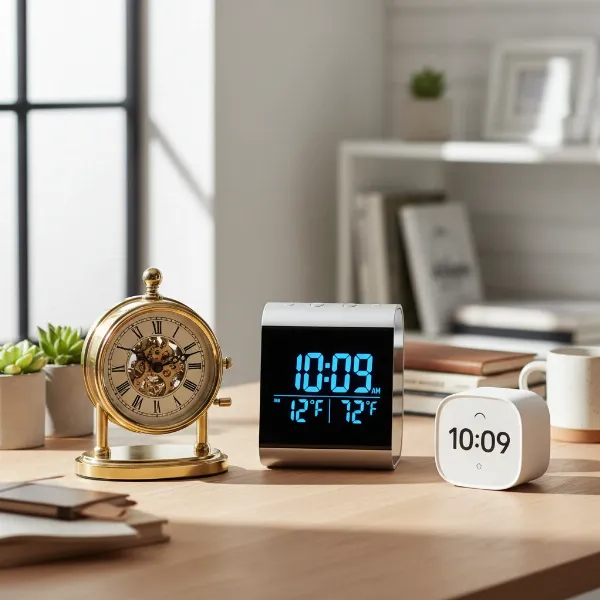 A comparison of different desk clock types, showing a classic mechanical clock, a modern digital clock, and a minimalist alarm clock in a well-lit home office.
How to Choose a Desk Clock
Selecting the perfect desk clock involves more than just picking one that tells time. It’s about finding a piece that integrates seamlessly into your life, meeting your functional needs while complementing your personal style.
Determine Your Usage Needs
Before diving into styles and features, consider the primary role your desk clock will play.
- Purpose: Are you looking for a purely decorative accent, a reliable alarm for your morning routine, a central time display for your office, or a multi-functional device with smart features? If precision and additional data like temperature are key, digital models are often superior. If aesthetics and a silent, unobtrusive presence are paramount, a high-quality analog clock might be ideal.
- Placement: Where will the clock sit? A large, ornate mechanical clock might be perfect for a spacious executive desk, while a compact, sleek digital clock with a USB charger could be better for a bedside table or a minimalist workspace. Consider the lighting in the area; a backlit digital display is excellent for low-light conditions, whereas an analog clock with luminous hands might be preferable if you want to avoid bright lights at night.
- Budget: Desk clocks range widely in price, from affordable basic digital models to luxury mechanical masterpieces. Establish a budget to narrow down your options, keeping in mind that higher price points often reflect superior materials, craftsmanship, and advanced features.
Select the Right Clock Type
Once your needs are clear, consider the design elements that will best fit your environment.
- Style: Do you prefer a vintage or retro look, a modern minimalist design, or something more industrial or classic? Analog clocks often lean into traditional or vintage aesthetics, while digital clocks typically offer contemporary and minimalist styles. Brands like Driini offer modern mid-century analog clocks for a touch of elegance.
- Material: The material significantly impacts the clock’s durability and visual appeal. Wooden clocks offer warmth and a natural touch, suitable for Scandinavian or boho decors. Metal clocks can provide a bold, industrial, or sophisticated look. Plastic clocks are often lightweight and practical, while glass or crystal clocks add a touch of luxury and sparkle.
- Features: Beyond telling time, what else do you need? Common features include alarms, snooze buttons, date displays, thermometers, hygrometers (humidity), backlights, and USB charging ports. More advanced digital clocks can offer wireless charging, radio functions, or even smart home integration.
Compare Prices and Make a Purchase
Finding the right clock also involves smart shopping practices.
- Reputable Stores: Purchase from well-known retailers, official brand websites, or established online marketplaces with strong return policies. This helps ensure authenticity and quality.
- Price Comparison: Always compare prices across different vendors. While a good deal is enticing, be wary of prices that seem “too good to be true,” as counterfeits or low-quality products can exist.
- Product Quality: Read reviews and check product specifications carefully. Look for details on movement quality (e.g., quiet quartz movement), battery life, display clarity, and overall build.
Desk Clock Comparison Table
To help illustrate the diverse offerings, here’s a comparative overview of typical desk clock categories:
| Category | Key Features | Pros | Cons | Price Range (Approx.) |
|---|---|---|---|---|
| Classic Analog | Roman numerals, silent quartz movement, wood/metal casing, battery-operated | Elegant aesthetic, quiet operation, complements traditional decor | Limited features, no alarm in some models, less precise than digital | $30 – $150+ |
| Modern Digital | LED display, multiple alarms, snooze, temperature, date, USB charging | Highly accurate, easy-to-read, feature-rich, compact | Can be too bright, less aesthetic appeal for traditionalists | $20 – $100 |
| Smart Alarm Clock | Large LED, wireless charging, Bluetooth speaker, app control, auto-dimming | Advanced functionality, convenience, integrates tech | Higher price point, potential for screen distraction, complex setup | $50 – $200+ |
| Mechanical (Luxury) | Intricate gears, handcrafted casing (brass/wood), often wind-up, no battery | Exquisite craftsmanship, unique heritage piece | High maintenance, very expensive, potential ticking sounds | $500 – $10,000+ |
“A desk clock is more than just a functional object; it’s a statement piece that reflects your personal style and commitment to intentional living.” – Admin, Founder of reviewspdv.com
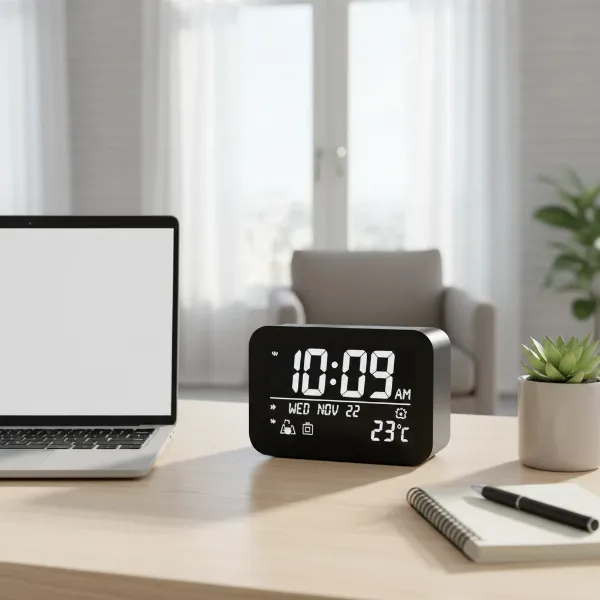 A sleek modern digital desk clock on an organized wooden desk in a contemporary home office, displaying time, date, and temperature with soft backlighting.
Tips for Using and Maintaining Your Desk Clock
Proper care ensures your desk clock remains a reliable and beautiful fixture for years to come. Whether it’s a delicate mechanical piece or a robust digital model, a little attention goes a long way in preserving its functionality and appearance.
Proper Clock Cleaning
Regular and correct cleaning is vital for maintaining your clock’s pristine condition.
- Basic Cleaning Steps: For general dusting, use a soft, dry, lint-free cloth. For tougher grime, dampen the cloth slightly with water or a mild, non-abrasive cleaner. Always apply cleaner to the cloth first, never directly to the clock, to prevent liquid from seeping into internal mechanisms or damaging finishes.
- Using Suitable Cleaning Solutions: For wooden cases, a good furniture polish or paste wax applied with a soft cloth is ideal. For glass components, use a quality liquid non-ammonia glass cleaner, again applied to a cloth. Brass components should only be cleaned with a soft cotton cloth; avoid abrasive cleaners or polishes that can damage the finish or seep into the workings.
- Handling with Care: Always grasp clocks from strong, secure areas, avoiding delicate appendages or decorative elements. When setting an analog clock, always move the hands forward (clockwise) to prevent damage to internal gears.
Storing and Protecting Your Clock
Environmental factors can significantly impact a clock’s longevity and accuracy.
- Avoid Direct Sunlight: Prolonged exposure to direct sunlight can fade finishes, warp wooden cases, and degrade digital displays. Position your clock in a spot away from direct sun.
- Avoid Humid or Damp Environments: High humidity can corrode metal components in mechanical clocks, damage finishes, and even lead to mold growth. Maintain a stable indoor environment, ideally around 21 degrees Celsius with 35-50% relative humidity. Avoid placing clocks near bathrooms, kitchens, or open windows where humidity fluctuates.
- Secure Placement: Ensure your desk clock is placed on a stable, flat surface where it won’t be easily knocked over. If it’s a heavier, more delicate piece, consider a secure, dedicated spot away from high-traffic areas or curious pets and children. For wall-mounted clocks, use heavy-duty screws for security.
“The true value of a desk clock isn’t just in its ability to tell time, but in the calm, focused environment it helps create on your personal stage.” – Admin, Founder of reviewspdv.com
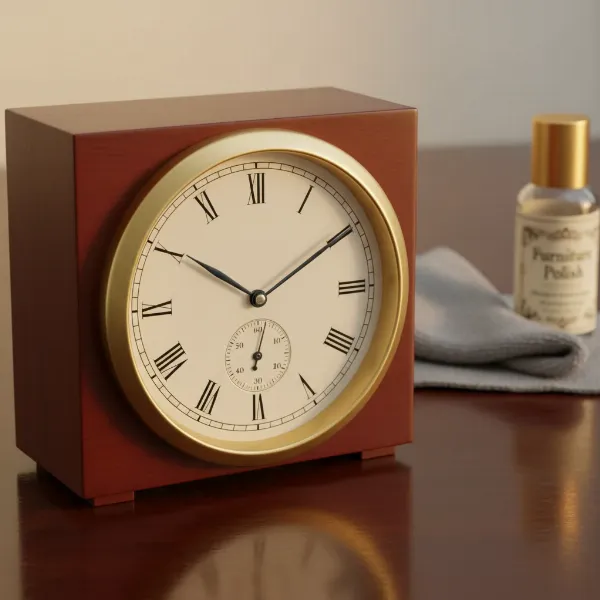 A beautifully maintained vintage analog desk clock with a wooden case, brass accents, and a clear, elegant dial, positioned on a polished desk with cleaning supplies nearby.
Conclusion
Choosing the right desk clock is a blend of practical consideration and personal expression. From the timeless artistry of a mechanical piece to the smart functionality of a digital display, each type offers distinct advantages. By carefully assessing your needs, preferred style, and desired features, you can find a desk clock that not only keeps you punctual but also enhances your environment. Remember, whether it’s a minimalist statement or a feature-packed gadget, proper care and maintenance will ensure your chosen timepiece remains a cherished and functional part of your daily life for years to come. What kind of desk clock will best reflect your unique style and needs?
Frequently Asked Questions
What are the main differences between analog and digital desk clocks?
Analog clocks typically feature a traditional face with hands, often emphasizing aesthetics and classic design. Digital clocks display time with numbers, are generally easier to read quickly, and often include more advanced features like alarms, temperature displays, and charging ports.
How often should a mechanical desk clock be serviced?
True mechanical desk clocks benefit from professional oiling every two years and a thorough cleaning every five to ten years, depending on environmental conditions like humidity. This ensures the intricate mechanisms operate smoothly and accurately.
Can I use any cleaning product on my desk clock?
No, it is crucial to use appropriate cleaning products. For cases, use a soft, dry cloth. For glass, apply a non-ammonia cleaner to a cloth first. Avoid abrasive cleaners, polishes, or spraying liquids directly onto the clock to protect its finish and internal components.
What features should I look for in a digital desk clock for an office?
For an office, consider a digital desk clock with a clear, dimmable display, multiple alarm settings for reminders, a USB charging port for devices, and possibly a temperature/humidity display. A silent operation is also key to avoid distractions.
How do I prevent my wooden desk clock from warping or fading?
To prevent warping and fading, keep your wooden desk clock away from direct sunlight, extreme temperature fluctuations, and high humidity. Maintain a stable room environment and clean the case regularly with appropriate wood polish applied to a soft cloth.
Are desk clocks battery-operated or do they plug in?
Many digital desk clocks are electric and plug into an outlet, often with a battery backup for power outages. Analog clocks are typically battery-operated, using AA batteries, which offers greater portability. Some smart clocks may offer both or even wireless charging capabilities.
What makes a desk clock a “smart” alarm clock?
A smart alarm clock typically integrates features beyond basic time and alarm, such as wireless charging, Bluetooth speakers, app connectivity for customized settings, and sometimes voice assistant integration (like Alexa). They often have advanced display options and gentle wake-up routines.